
Europa Universalis 5 is easiest to learn if your first campaign has one job: survive the first 50 years without turning the country into a broke, low-control, permanently-at-war mess.
Do not try to master every system on day one. EU5 is built around population, markets, control, estates, diplomacy, war, trade, and long-term development. Those systems interact, so random clicking can make the country worse even when every individual button looks helpful.
The practical beginner plan is simple: pick a country with room to make mistakes, pause on day one, stop unnecessary spending, build near your capital, secure diplomacy, fight only limited wars, and use the first 50 years to learn how money and control work.
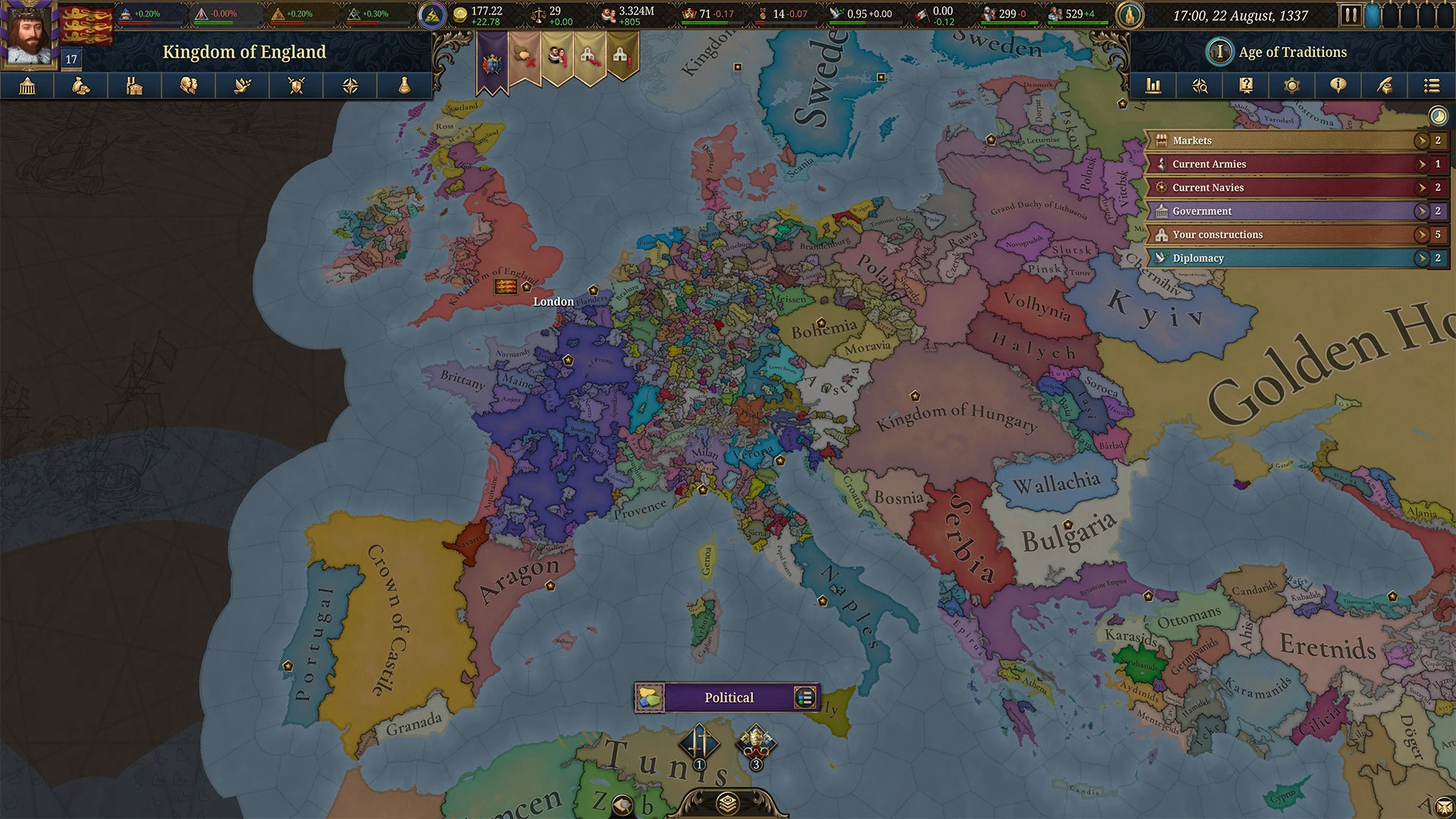
A broad Europe view is a useful reminder that a safe first country is not always the smallest country on the map.
Quick Answer: What To Do In Your First 50 Years
| Phase | Main goal | What to do |
|---|---|---|
| Before unpause | Understand your starting position | Check income, expenses, neighbors, market, control, army, navy, estates, and available tutorial guidance. |
| Years 1-10 | Stabilize | Avoid major wars, improve key relations, trim wasteful expenses, build only where control and market access make sense. |
| Years 10-25 | Build the core | Develop your capital area, improve roads/control, add safe raw resource or market-supporting buildings, keep reserves for surprises. |
| Years 25-50 | Choose one direction | Pick one plan: limited expansion, trade setup, subject management, exploration prep, or internal development. Do not do all of them at once. |
If you are completely new, use an in-game recommended country that activates the Learning Walkthrough and tutorial missions. The Paradox Wiki beginner guide currently lists recommended tutorial starts by learning category, including Hungary for economy and Castile for expansion, while also flagging parts of the page as needing verification for older sections. Treat those recommendations as a good starting filter, not as a permanent patch-proof ranking.
Pick A First Country That Teaches One Thing Well
Your first country should not be the smallest country on the map. In EU5, small countries can be fragile, dependent on larger neighbors, and less forgiving when one bad war or market problem hits. A good beginner country gives you enough land, money, and diplomatic options to recover from mistakes.
| Country | Best for learning | Main risk | Best next read |
|---|---|---|---|
| Hungary | Land economy, control, safe development, measured expansion | Overexpanding into low-control Balkan land or ignoring Bohemia | Hungary EU5 Guide: First 50 Years |
| Castile | Expansion, diplomacy, Iberian wars, later exploration | Too many options at once; early wars before economy is ready | Castile EU5 Guide: First 50 Years |
| Portugal | Trade, navy, Atlantic positioning, future exploration | Assuming it is passive or safe like an old EU4 tutorial island | Portugal EU5 Guide: First 50 Years |
If you want the safest first learning run, start with Hungary. If you want a classic all-round campaign, choose Castile. If you specifically want trade and exploration, choose Portugal, but treat the first decades as survival and setup.
Before You Unpause: The 15-Minute Checklist
Pause is your best beginner tool. Before the first day moves, inspect the country rather than immediately building, declaring war, or changing laws.
Check Your Money
Open your economy view and identify your biggest expenses. EU5 money is not just "tax more and build more." The economy depends on tax base, control, estate power, markets, trade, army and navy costs, court costs, stability spending, loans, minting, and goods prices.
Before building anything, ask:
- Am I already losing money?
- Are army, navy, fort, court, or stability expenses unusually high?
- Do I need full maintenance right now?
- Do I have enough cash to survive a bad event, plague, war, or loan interest?
If you are losing money immediately, do not solve that by spamming buildings. First, reduce unnecessary expenses and understand why the deficit exists. For a deeper breakdown of income, spending, loans, and bankruptcy, read the live EU5 Economy Guide.
Check Control Before Building
Control determines how much value the central government can actually extract from a location. A rich province with weak control can look good on paper but contribute far less than a beginner expects.
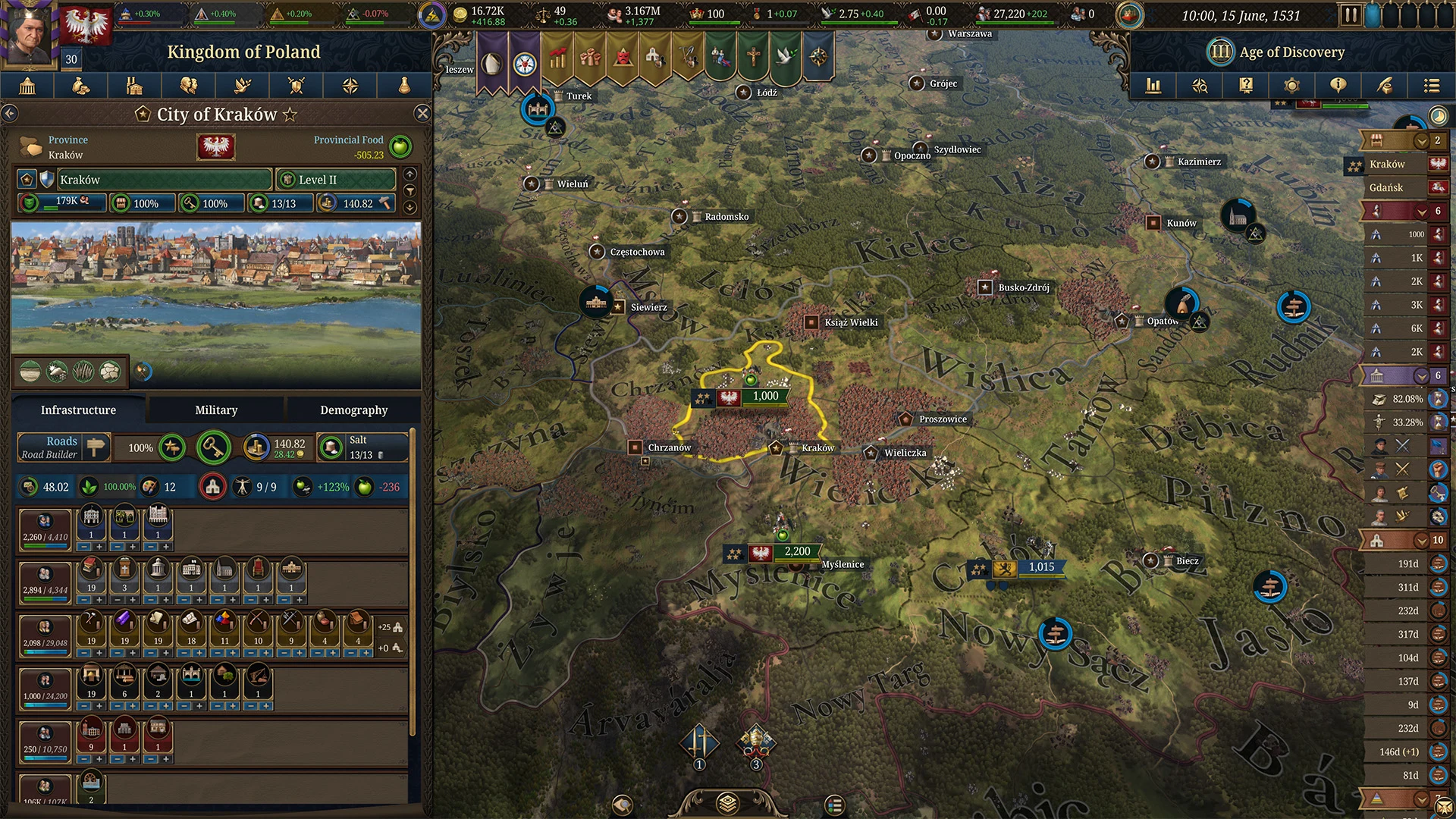
Before you build, inspect the location itself: control, market access, staffing, goods, and distance from your core all matter.
For your first 50 years, prioritize areas near the capital and other high-control locations. Build where:
- control is already decent or can be improved;
- market access is usable;
- population can staff the building;
- the produced good has demand;
- the location is not about to become a war zone.
This is why "build around your capital first" is usually safer than spreading construction everywhere.
Check Your Market
Markets decide what your pops and buildings buy and sell. The Paradox Wiki market page describes market access, trade capacity, trade advantage, imports, exports, and market centers as important parts of how goods move.
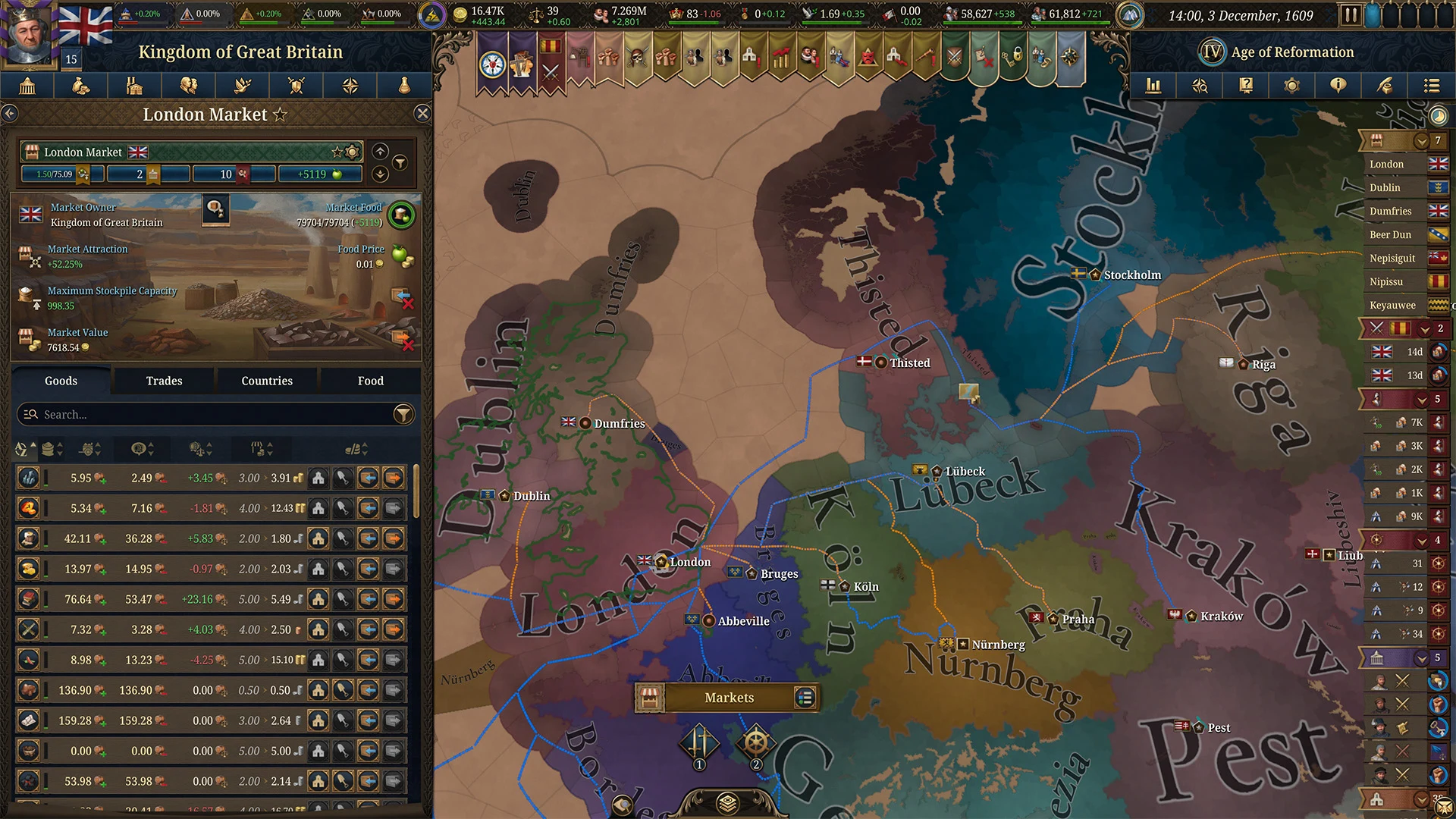
A beginner does not need perfect trade optimization on day one, but the market screen explains why some buildings make sense and others disappoint.
As a beginner, do not try to optimize every trade route before unpausing. Instead:
- identify your market center;
- look for obvious shortages and surplus goods;
- check whether your key provinces are actually in a useful market;
- avoid expensive market decisions until you understand the cost.
Trade is a future deep-dive topic. For now, know that buildings make more sense when their inputs and outputs fit your market.
Check Diplomacy Before Rivals
Do not rival the first neighbor you see. Check:
- who can attack you;
- who is already friendly;
- who hates your enemies;
- whether you need alliances more than claims;
- whether a war would pull in a stronger defender.
For new players, the best first diplomatic move is often improving relations with one dangerous neighbor while looking for one practical ally.
Check Army, Navy, And Forts
War is expensive even when you win. Before you fight:
- compare armies and navies in the war declaration screen;
- check whether allies will actually join;
- understand the war goal;
- avoid long sieges if your economy is fragile;
- keep some manpower and money in reserve.
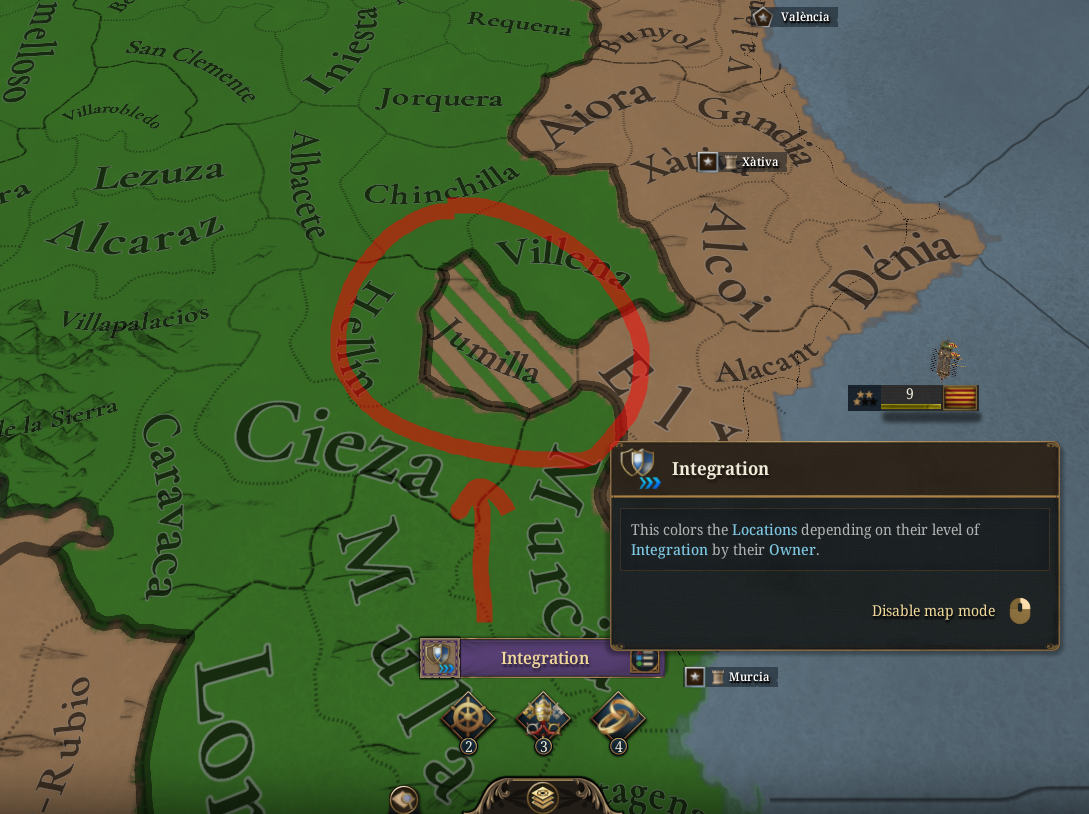
Before declaring war, use map modes and claim information to understand what you are actually trying to take.
Forts and fleets are useful, but they also cost money. Do not delete every defense blindly. Do not maintain everything at maximum if no war is coming.
Use Automation Carefully
EU5 includes automation options, and the beginner wiki groups automation by economic, political, and expansion categories. Automation can reduce overload, but it can also hide why something is happening.
For a first campaign, use automation when the alternative is random clicking, but manually inspect the results. Your goal is not to prove you can run every slider yourself. Your goal is to learn what changes when the country starts moving.
Years 1-10: Stabilize Before Expanding
Your first 10 years are not a race. The most common beginner mistake is treating EU5 like a conquest checklist, then wondering why the new land makes no money.
In years 1-10:
- keep the country solvent;
- build or queue only high-confidence economy projects;
- improve relations with at least one important neighbor;
- avoid unnecessary law changes;
- do not fight a major war unless the setup is obviously favorable;
- watch population, control, market, and estate warnings.
If you are playing Hungary, develop the Buda/core economy and examine nearby mines. If you are playing Castile, stabilize Iberian diplomacy before throwing the whole country into war. If you are playing Portugal, keep Castile from becoming the immediate problem and build a trade/economy base before dreaming about distant colonies.
Years 10-25: Build The Core Economy
Once you have watched the country run for a few years, start turning observation into a plan.
Good beginner development usually means:
- roads or control-supporting infrastructure where it improves your core;
- raw resource development where goods are needed and staffing exists;
- market-supporting buildings in strong locations;
- avoiding buildings in low-control areas just because projected profit looks exciting;
- keeping enough cash to react to bad events.
This is also when you should decide what you are not doing yet. A good first campaign has restraint. If you are building the economy, do not also start three wars, change major laws, and launch a risky diplomatic play at the same time.
Years 25-50: Choose One Expansion Plan
By year 25, you should know whether your campaign is stable. If it is not stable, your job is still recovery.
If it is stable, pick one direction:
| Plan | Good for | Beginner warning |
|---|---|---|
| Limited conquest | Castile, Hungary, strong regional powers | Take land you can control, defend, and integrate. |
| Subject buffer | Hungary, Castile, border regions | Subjects reduce direct management but still require diplomacy and long-term planning. |
| Trade setup | Portugal, coastal powers | Trade needs market access and capacity; do not ignore security. |
| Internal development | Any country | Slower, but often the best way to learn economy and control. |
| Exploration prep | Portugal, Castile later | Do not sacrifice basic economy for distant ambitions too early. |
The first 50 years are a success if you understand why your country is making money, who can threaten you, what your next war would cost, and which locations are worth developing.
Common Beginner Mistakes
| Mistake | Symptom | Safer fix |
|---|---|---|
| Building everywhere | New buildings barely improve income | Build near capital/high-control areas first and check market demand. |
| Expanding too fast | Conquered land feels useless, unrest rises, money drops | Take fewer provinces, use subjects where appropriate, and consolidate. |
| Ignoring expenses | Treasury hits zero before projects pay back | Review maintenance, forts, court, stability spending, minting, and loans. |
| Fighting without a plan | Long war, war exhaustion, no useful peace deal | Define the war goal, required occupations, and exit before declaring. |
| Picking a tiny first country | One bad neighbor ends the campaign | Start with a country that has room to recover. |
| Copying old EU4 habits | Trade, pops, control, and buildings feel wrong | Treat EU5 as a new game and read tooltips carefully. |
| Overusing console in main save | Campaign becomes hard to learn from | Use the console only in a copied sandbox save. |
If you do use the console to test mechanics, do it in a copied save rather than your main campaign. The live EU5 Console Commands and Cheats List is the safer reference for sandbox testing.
What To Read Next
This page is the beginner pillar for the EU5 start-here cluster. As the supporting articles go live, it should link out to:
- Best Starter Nations in EU5
- Portugal EU5 Guide: First 50 Years
- Castile EU5 Guide: First 50 Years
- Hungary EU5 Guide: First 50 Years
For now, the most important live next step is the EU5 Economy Guide if money, loans, control, or buildings are the reason your first campaign is struggling.
FAQ
What is the best country for a first EU5 campaign?
Hungary is the safest recommendation if you want a land-focused first campaign with economy and control lessons. Castile is the best all-round pick if you want expansion and later exploration. Portugal is best if you specifically want trade, navy, and a future exploration path, but it is not a passive start.
Should I use automation as a beginner?
Yes, if it prevents random clicking. Use automation as training wheels, then inspect what it changed. Do not let automation become a black box.
Why am I losing money in the first years?
Usually because expenses are too high, control is weak, buildings are not paying back yet, or the market cannot support what you built. Check spending before queuing more construction.
Should I take loans or mint?
Loans and minting are tools, not automatic failure. Use them for a reason: surviving a war, bridging a short-term cash gap, or funding a project that will actually pay back. Do not use them to hide a structural deficit you have not investigated.
Should I conquer land in my first 10 years?
Only if the war is limited, affordable, and gives land you can control or use. A war you can win militarily can still be bad if it wrecks your economy.
Is EU5 harder than EU4 for beginners?
It is different. EU4 habits help with map awareness and diplomacy, but EU5's population, control, market, and building systems require a fresh approach.